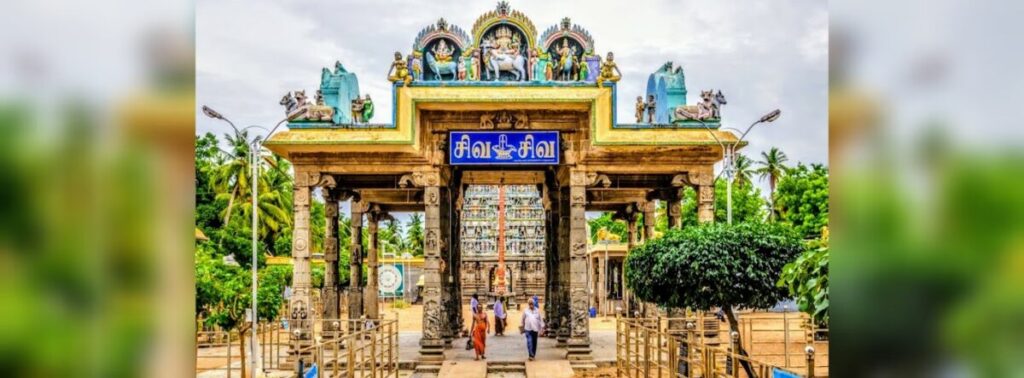
Thiru Nangur

Thiru Nangur

HIGHLIGHTS:

  • Eleven Vainava Divya Desangal
  • Twelve Shiva Temples (two Devara Paadal Petra Sthalangal)
  • Pancha Narasimha Kshetrangal
  • Eleven Garuda Sevai Festival
  • Twelve Rishabha Sevai Festival

Thiru Nangur is located in Nagapattinam District, near the town of Sirkazhi. It houses eleven of the 108 Vainava Divya Desangal.

All the eleven of them were done Mangalasasanam by Thirumangai Azhwar, who was born and lived in this region. His life story is closely linked to Thiru Nangur.

ETYMOLOGY:

Thiru Nangur might have got its name from the fact that it is a conglomeration of four villages. (Nangur = Naangu + Oor)

EPITHETS:

  • Maraiyor Vananga Pugazh Nangur
  • Manam Malgum Nangur
  • Mangayar Mugam Kaatidum Nangur
  • Kayal Odi Vilayadu Nangur
  • Settralayil Ven Mutham Sindhum Nangur
  • Kali Muralum Nangur
  • Theengani Nugarum Nangur
  • Mannu Pugazh Nangur
  • Nindru Arulum Idam Ezhil Naangai
  • Pural Tharan Seidha Naangai
  • Thvala Maada Needu Naangai

HISTORICAL FACTS:

  • In the days of ancient glory, the border of Thiru Nangur had extended up to Poompuhar.
  • Equivalent to Varanasi in fame
  • Bodyguards to the Tanjore Brihadeeshwara temple were despatched from Thiru Nangur
  • Sendhanaar, the clerk of Pattinathar, was from Thiru Nangur
  • Pattinapaalai and Porunaraatru Padai are the literary works that mention the grandeur of Thiru Nangur

FESTIVALS:

  • The Eleven Garuda Sevai festival
  • The Twelve Rishabha Sevai festival
  • Kali Katti Utsavam

THE ELEVEN GARUDA SEVAI:

The elven Garuda Sevai is a festival that happens annually, during the Thai Amavaasai. All the eleven Utsava Moorthies of the eleven Thiru Nangur Vainava Divya Desangal are brought to The Thiru Mani Maada Koil (32/108) and are taken as a procession on Garuda Vahanam, after being sung the Mangalasasanam by Thirumangai Azhwar. Then Manavaala Maa Munigal sings Mangalasasanam for Thirumangai Azhwar.

Thirumangai Azhwar from Thiru Nagari (34/108) is taken to all the eleven temples where he sings for The Deities there and then all the eleven Utsava Moorthies are led by Thirumangai Azhwar and his wife, Kumudhavalli Natchiyaar on Hamsa Vahanam and Manavaala Maa Munigal on Sesha Peedam.

The next day, Thirumangai Azhwar returns to Thiru Nagari and does Mangalasasanam for both Thiruvaali and Thiru Nagari (35/108), which are together considered as a single Divya Desam.

THE TWELVE RISHABHA SEVAI:

The twelve Rishabha Sevai festival happens annually in Thiru Nangur during the month of Vaigasi during the Rohini Nakshathram. Due to unforeseen circumstances, this festival was abandoned for the past 100 years. The tradition has been renewed and the twelve Rishabha Sevai is happening since the year 2016.

Mathanga Maharishi was born out of the Matangam, the elephantine form which Brahma Dev took to meditate on Lord Shiva. He undertook severe austerities seeking The Lord’s blessings.

Devi Parvathy was born as a baby in the pond and was raised by Matanga Maharishi as his own daughter. He named Her as Matangi. Lord Shiva came as Matangeshwarar and married Raja Matangi and showed His “Kalyana Kolam” to Matanga Maharishi.

This temple is situated near the Thiru Mani Maada Koil (32/108).

There are 11 more temples of Lord Shiva in Thiru Nangur. And during this festival, all of them arrive here and are taken as a procession along with their consorts on their bull mounts.

THE LORE OF THIRU NANGUR:

The story takes us back to the time of creation. Shiva is Mahadeva. His Shakthi, His half, His Devi is Prakriti. The personification of creation itself. Being the essence of energy itself, She had to get detached from Shiva for the benefit of the cosmos to pervade in each and every atom. Thus, Shiva became a hermit, an ascetic. A Vairagi, who had renounced all worldly pleasure and abhorred companionship.

But the union of Shiva/Shakthi was inevitable. The essence of Aadhishakti was drawn to Her Shiva. So, she decided to attain Him. She was born as the eldest daughter to Daksha Prajapati who named Her as Sati. She was always daddy’s-little-princess and hence also revered as Dakshayani (She who follows Daksh)

Daksha was the son of Brahma Dev. He was the Prajapati who laid down the rules and norms of living a dutiful and productive life for all human beings. He had two wives, Prasuthi and Veerini. Together they had 62 daughters, of which Sati was the eldest.

As the days passed, Sati was drawn to the pull of Shiva and fell in love with Him. Daksha who was a staunch devotee of Mahavishnu, strongly disapproved of the love Sati had for Shiva. He was under the impression that a nomad, a crematorium inhabitant, a serpentine lover, an ash smeared aloof abomination like Shiva didn’t deserve his respect.

His hatred also stemmed from the fact that Shiva in his first act of valour, had beheaded one of the five heads of Brahma, Daksha’s father, in Thirukandiyur.

He arranged a swayamvara for Sati. He had invited all eligible suitors except Shiva. When the learned elders questioned this, Daksha made a statue of Shiva and kept it in the palace courtyard. Sati instinctively garlanded the statue and to her delight, Shiva materialised out of the statue and whisked her away to Kailash.

Daksha was so enraged that he renounced his daughter and ordered her funeral rites to be done. He was in no mood to accept Her. But Shiva and Sati were in their own blissful bubble. But the wheels of fate turned slowly, and trouble brewed.

Brahma Dev had arranged for a Maha yaagam and had called everyone to attend it. Shiva and Sati were specially honoured as they were the Divine Couple of the hour. Daksha came late to the altar and everyone rose to greet him obeisance. Shiva dint rise as He was present there as Mahadeva, The presiding God of the Yaagam and not as Daksha’s son-in-law. This infuriated Daksha a lot and he vowed to take revenge.

Daksha too organised a Maha yaagam, for the welfare of the world, just like Brahma did. He invited everyone, high and low. But he deliberately didn’t send an invite to Shiva ad Sati. When Sati came to know of this, she felt heart broken. She was upset two-fold because Her dearest father still hated Her, and Her husband was being insulted by being deliberately uninvited.

She decided to go to the Maha yaagam and convince her father to invite Shiva and to make amends to their broken relationship. Shiva refused to let Her go. He cited that it is never polite to go anywhere without being invited. Sati is in no mood to listen. She is adamant that She will go.

Shiva tried to reason with Her. He tells Her that she was no ordinary human princess and that She is Prakriti, Aadhi Shakthi Herself. And that she had to realise that and waken Her aura. He promised to accompany Her to the Maha yaagam if She did that. Shiva also told that if Sati doesn’t go to the Maha yaagam as Aadhi Shakthi, then a great calamity will befall on Her.

Sati could not bear this any longer. In a fit of rage, She shrieked at Him and said that if any harm would befall on a daughter who went to her father’s home, then let it happen. She also bound Shiva with Her words and said that He could come only after the impeding Catastrophe He predicted had happened.

Shiva sent Nandi and his entourage of Shiva-ganas as protection and went into meditation fearing the consequences of Sati’s action for Her own sake.

Sati reached the venue of the Maha Yaagam and called out to Her Father who insults Her for coming without an invitation. She tried to reason with Him and pacify Him, but to no avail. Her efforts as Dakshayani failed to rationalise with Daksha. Sati, as the wife of Shiva, tried to demand respect for her husband.

Daksha seized the opportunity and continuously flung a flurry of poisoned words at hapless Sati and hurled abuses on Her about Shiva. Sati begged him to stop. But Daksha, in his arrogance continued to speak humiliatingly about Shiva in derogatory terms.

Out of despair, Sati reached out to the elders at the altar and questions them on their silence to the injustice meted out by Daksha and his vile words against Shiva. All she received was a meek silence in reply.

An enraged Sati erupted as Aadhi Shakthi and in Her Viswaroopa, She told Daksha that She is Prakriti Herself and was born as Her daughter with the sole intention of Marrying Shiva. But in his arrogance, Daksha had insulted Her and Her husband. She felt saddened because She came blindly ignoring all the warnings of Shiva only to hear the derogatory words by Daksha.

She then decided that She is unfit to be Shiva’s wife as Dakshayani. She summoned Her own Yoga Agni and self-immolates Herself. Before incinerating Her mortal body, She warned Daksha about the consequences of his dastardly deeds. As Shiva has lost His wife, Daksha and the whole world will have to suffer. With that, the essence of Aadhi Shakthi again returns to Prakriti (Nature) and the cindered charred body of Sati falls into the altar in a conflagrated heap.

Nandi and the Shiv-ganas rushed to Shiva to tell Him of the diabolical vindictiveness of Daksha and the untimely demise of Sati. Shiva wakes up from his meditative trance and performs the pralaya Thandava. He is so enraged that the entire cosmos feels the ripples of His anger. He then unwinds his matted locks and tears a tuft of hair and creates a fierce eight-armed Avatar of Himself, Veera Bhadra. From another tuft of hair, He creates the fierce and gruesome to behold Bhadrakali. Shiva then tells them to go and decimate the Maha yaagam of fool-hardy Daksha and to kill him.

Veerabhadrar and Bhadrakali arrive at the altar and weave a storm of destruction raining blows to everyone who stood still during Daksha’s Shiva nindhanai and Sati’s self-immolation. A covering Daksha tried to escape but is caught by Veer Bhadra who trampled him beneath his feet, snatched all the beneficial boons bestowed on Daksha. In a single slice, He then proceeds to behead Daksha and flings the head into the same sacrificial altar that Sati chose to burn Herself. The Shiva-ganas and their leaders Veera Bhadrar and Bhadrakali returned victoriously to Mount Kailash after avenging the death of Devi Sati.

A heart-broken Shiva came to the altar and weeps for the loss of His wife, Sati. The whole world wept with Him. He carried the charred body of Sati and roams around the world in a gloomy misery. He forgot that He is Mahadeva. He aimlessly wandered the cosmos with the ashen burnt body of Sati.

Mahavishnu decided that the only way to make Shiva come to His senses was by releasing the remains of Sati from Him. So, Mahavishnu flings his discus at the body of Sati which gets cut into 51 pieces. The pieces (pindam) fall on 51 places all over the land. Being the essence of Sakthi, they get consecrated at places of Devi worship and are venerated as Shakthi Peedangal today.

Shiva was distraught with anger at the loss of his wife and started to dance. The cosmic dance of fury happened at Thiru Nangur. As the rage of the dance increased, hair from Shiva’s locks started to fall on the ground.

Wherever his hair fell, it became a Rudra and started to dance. This happened for elven times. Thus, eleven Rudras were created from the Hair of Shiva. All the eleven Rudras started to dance in fury. The entire universe trembled at their fury. Lord Vishnu decided to intervene and appeared in front of Shiva to pacify Him. On seeing Lord Vishnu, Shiva’s anger fizzled off and his fury relented. Likewise, Lord Vishnu took a total of eleven forms and stood in front of all the eleven Rudras to pacify them. And that is how the eleven Divya Desams of Thiru Nangur came into existence

THE ELEVEN DIVYA DESAM OF THIRU NANGUR:

Temple

Divya Desam

Lord

Consort

Thiru Kaavalam Paadi

27/108

Gopala Krishnan

Rukmini/ Sathyabama

Thiru Arimeya Vinnagaram

29/108

Kudamaadu Koothan

Amruthakda Valli

Thiru Vann Purshotthamam

30/108

Purushothaman

Purushothama Nayaki

Thiru Sem Pon Sei Koil

31/108

Sem Pon Arangan

Alli Maa Malaraal

Thiru Mani Maada Koil

32/108

Badri Narayana Perumal

Pundareeka Valli

Vaigunda Vinnagaram

33/108

Vaigunda Perumal

Vaigunda Valli

Thiru Mani Koodam

34/108

Varadharaja Perumal

Thiru Maa Magal Naatchiyaar

Thiru Devanaar Thogai

36/108

Madhava Perumal

Madhava Nayaki

Thiru Thetri Ambalam

37/108

Palli Konda Perumal

Sengamala Valli

Thiru Vella Kulam

39/108

Annan Perumal

Alar Mel Mangai

Thiru Paarthan Palli

40/108

Thaamarayaal Kelvan

Thamarai Naayaki

THE TWELVE SHIVA TEMPLES OF THIRU NANGUR:

Temple

Peedam

Lord

Consort

Thiru Nangur

Thathpurusha Peedam

Mathangeshwarar

Raja Mathangi

Keezhai Thiru Kaatupalli

Agora Peedam

Aaranya Sundareshwarar

Akilandeshwari

Keezh Sattanadhapuram – Thiru Yogeeswaram

Vaama Deva Peedam

Yoga Naadhar

Yogambaal

Kaathiruppu

Sathyjatha Peedam

Sornapureeshwarar

Sornambigai

Thiru Nangur

Soma Peedam

Amrudhapureeshwarar

Chandrakshi

Alli Vilaagam

Saarva Peedam

Naaga Naadha Swamy

Nattrunai Nayaki

Thiru Nangur

Mahadeva Peedam

Nambuvaarku Anbar

Anbirpiriyaal

Thiru Nangur

Bheema Peedam

Kailasa Naadhar

Kamakshi

Thiru Nangur

Bhava Peedam

Sundershwarar

Soundara Nayaki

Perunthottam – Atheeswaram

Praana Peedam

Airavatheshwarar

Athulya Gujaambal

Annapan Pettai

Rudra Peedam

Sundershwarar

Sundaraambaal

Mel Nangur

Paasupadha Peedam

Nayana Varadeshwarar

Nalinambigai

THE PANCHA NARASIMHA KSHETRAM:

There are five Narasimha Temples in the vicinity of Thiru Nangur, which were worshipped by Thirumangai Azhwar.

Temple

Deity

Thiru Kurayalur

Ugra Narasimhar

Mangai Madam

Veera Narasimhar

Thiru Nagari

Yoga Narasimhar

Thiru Nagari

Hiranya Narasimhar

Thiruvaali

Lakshmi Narasimhar

EKADASHA RUDRA – THE ELEVEN FORMS OF LORD SHIVA ACROSS LITERATURE:

Number

Matsya Purana

Vishnu Purana

Mahabharata

As Sons of Tvastsr

1

Nirriti

Manyu

Mrgavedha

Vishva Rupa

2

Shambu

Manu

SArpa

Ajaikapadh

3

Aparajitha

Mahamasa

Niritti

Ahi Budhnya

4

Mriga Vyadha

Mahan

Ajaikapadh

Virpaksha

5

Kapardhi

Siva

Ahi

Raivata

6

Dahana

Rtudjwaja

Budhnya

Hara

7

Khara

Ugraretas

Pinakin

Bahurupa

8

Ahir Abradhya

Bhava

Dahana

Tryambhaka

9

Kapali

Kama

Ishvara

Savitra

10

Pingala

Vamadeva

Kapali

Jayanta

11

Senaani

Dhrtavarta

Sthanu

Pinakin

OUR EXPERIENCE:

We decided to postpone the written updates of the other temples and jump to Thiru Nangur because we had been there recently for the eleven Garuda Sevai and were overwhelmed by the splendid and amazing festival.

The post above will give you an idea about Thiru Nangur. We will be covering the 11 Vainava Divya Desams, 2 Devara Paadal Petra Shiva Sthalangal and the 5 Pancha Narasimha Kshetrangal in the days to come.

Thiru Nangur needs a solid week to cover all the temples in the are at leisure. And the two major festivals that happen annually are a must-see event. We are looking forward to the twelve Rishabha Sevai festival in May and will update about it when it happens.

We will be writing our accounts of the eleven Vainava Divya Desangal and also Thiruvaali/Thiru Nagari (35/108), which is very close to Thiru Nangur and then follow them up with a pose on the eleven Garuda Sevai festival that happened this year.

Thirumangai Azhwar has a very intimate connection with Thiru Nangur. He was a vigilante, an anti-hero, a Robin Hood of sorts and the events that transpired here led him to become the most prolific composer of Paasruams and the most travelled Azhwar among the twelve. We will be writing a separate post dedicated to him as his story cannot be condensed and written along with anything else.

Daunting tasks ahead, but we are SO looking forward to it. Stay tuned for more interesting updates. See you folks at the beginning of an amazing journey of scribing our pilgrimage – Thiru Paarthan Palli (40/108)

Loads of Love,

Karthick and Rahul.

Thiru Adhigai

Thiruvadhigai (218/276)

Name

Thiru Adhigai

Other Name

Adhigai Veerattam

Adhigaapuri

Aadhiraya Mangalam

Adhi Raja Mangalam

Adhi Raja Mangaliya Puram

District

Cuddalore

State

Tamilnadu

Devaram

Appar

Thiru Gnana Sambandhar

Sundarar

Position

Nadu Naadu

Presiding deity

Shiva

God

Veerataaneswarar

Utsava Moorthy

Tripuraari

Tripuranthagar

Goddess

Periya Nayagi

Tripura Sundari

Speciality

One of the Atta Veerataanangal

Sthala Vriksham

Sara Kondrai

Theertham

Soola Theertham

Chakra Theertham

Kedilam River

Worshipped by

Indra Dev

Yama Raj

Pandavas

Thilagavathy Ammai

Appar, Thiru Gnana Sambandhar & Sundarar

Temple timings

8AM to 12PM

5PM to 8PM

Contact details

LORE:

The presiding deity of the temple is Lord Veerataaneswarar and His Devi is Periya Nayagi.

What is the lore of the temple?

Prelude: Eons ago, sometime during the Sath Yug, there was a demon king named Tarakasuran. He was a staunch Shiva Devotee. He had obtained the boon that he can be killed only by Shivansh, and not by anyone else. Shiva was then married to Sati, the first incarnation of Aadhi Shakthi. Sadly, Their marriage did not last long. Sati immolated Herself, unable to bear the insults hurled at Shiva by Her abusive father Daksha Prajapati. Then She reincarnates as Devi Parvati and marries Shiva. Then “Kumara Sambhavam” happens. Murugan is born. He defeats Tarakasuran and redeems him of his karma by converting one half of the demon into his mount, the Peacock and the other half into the rooster motif of his insignia.

The three fortresses: Tarakasuran had three sons. They were infuriated at their father’s demise and wanted to secure boons of immortality from Brahma Dev. But Brahma Dev clearly told them that they can merely choose the mode of their death as everything that is born must perish one day. The three brothers schemed a devious plan and asked Brahma Dev for quite a complicated boon. They wanted three fortified citadels – one made of gold, one of silver and one of iron. The fortresses must be indestructible and should have the power to be aerial and traversing the lengths and breadths of the cosmos. The troublesome trio also wanted the three fortresses to align in a single straight line for a flitting moment, once in every thousand years, in the Abhijit Muhurtham, when Chandra Dev is in The Poosam Star, when the clouds of death (Pushakara) and the clouds without water (Nirjala Avarta) rain together. They also asked that the destruction of the fortresses and their denizens should happen only at this pristine moment when hit by a single very powerful arrow, simultaneously. As usual, Brahma Dev said “Thathaasthu”. He then summoned the demon architect, Mayasur and asked him to take up the daunting task. Always up for a challenge, Mayasur immediately obliged and set to work on what would be his latest masterpiece. Thus, the trio had acquired the “Tripura” –

The golden fortress, soaring in heaven ruled by Taarakakshan

The silver fortress, hovering in the skies, ruled by Kamalakshan

The iron fortress, winging over the earthen realm, ruled by Vidyunmali

The new religion: The demons were drunk with power and started harassing innocents. The Devas went to Lord Brahma and prayed for relief. But Brahma Dev told them that the karma of the trio has still not crossed the threshold of redemption. The Devas then went to Lord Vishnu who smirked and assured them that the auras will soon meet their end. To serve this end, He created a mendicant and ordered him to go to the Tripura. He was asked to preach a new religion, one that was totally against the Vedas and holy scriptures. The monk went to the iron fortress and occupied the forest outskirts and started to preach this false religion. Slowly the asuras forgot about piety and devotion and stopped what little of good deeds that they were doing and began indulging in nefarious activities. Their karma was bubbling quickly and the time of the once-in-a-thousand-years alignment was getting close.

The Devas’ plight: The Devas were once again in a fix. They did not know who or how the end of Tripura was going to be accomplished. They pleaded Brahma Dev to solve their turmoil and point the right way forward. Brahma Dev told them that nobody other than Lord Shiva will be able to destroy the three fortresses. Seek Him and pray that he concedes to your request. The Devas fled to Mount Kailash and asked Lord Shiva to devise a plan to end the reign of the Tripuraadhis.

The Divine Chariot: The Lord agreed to bring the end of the three cities. Then Brahma Dev ordered the construction of a hug chariot to aid in His cause.

The Earth

Base of the Chariot

The Sun

Fore wheel

The Moon

Hind Wheel

Lord Brahma

The Charioteer

The Four Vedhas

The Four Horses

The Pranav Mantra “OM”

The whiplash

Mount Meru

The limbs and riser of the Bow

Vasuki, The King of serpents

The string of the bow

Lord Vishnu

The shaft of the arrow

Agni Dev

The arrowhead

Vayu Dev

The fletching of the arrow

In this manner, the most magnificent chariot was crafted, and Lord Shiva was assumed the form of the cosmic archer. “Sharva” held the celestial bow similar to His own Pinaka and set off towards Tripura, long with Parvati, to annihilate the three fortresses.

The Devas’ arrogance: Unsurprisingly, the innate haughtiness of the Devas quickly resurfaced. They were filled with pride to think that it was only because of their help that Lord Shiva will be able to defeat Tripura and the three demons. They even had the audacity to think that anyone can destroy the impregnable edifices with this kind of bow and chariot. Little did they know that along with Tripura, their ego was also going to get incinerated.

The glitch in the wheels: The Chariot as moving fast and the time of synchrony of the three citadels was imminent. But, suddenly the axle of the back wheel broke into pieces. And the moon-wheel sunk and stopped at Achirupakkam (262/276). Then, Lord Shiva understood the reason. He did not pay His obeisance to Lord Ganesh before starting on this new venture, hence there a Vignam (Hurdle). He closed His eyes and meditated on Lord Ganesh, fondly called as Vigneshwara and sought a solution. Lord Ganesh asked Rudra, The Trinetradari Himself as the offering. Lord Shiva asked Him to settle for a compromise and offered the three eyed coconut instead and prayed to Lord Ganesh. The chariot began to move, inspite of the broken axle. It was seen that a black bull lifted the sunken moon-wheel upon its hump and absolved the conundrum created by the broken axle of the wheel. The black bull was none other than Lord Vishnu Himself. He had lifted the sunken Mandara Parvatha during the “Samudra Mandan” (The churning of the Great Milky Ocean) as a Turtle (Koorma Avatar). Then he had lifted the sunken Bhumi Devi as Lord Varaha. Now he had become the Rishabha Moorthy to lift the chariot of Lord Shiva.

There is a verse in one of the Thirumangai Alwar Paasruams which beautifully quotes this event.

“Virperu Vizhavum Kanjanum Mallum

Vezhamum Paaganum Veezha

Settravan Thannai Puram Eri Seidha

Sivan Uru Thuyar Kalai Thevai

Pattralar Veeya Kol Kaiyil Kondu

Paarthan Than Ther Mun Nindraanai

Sittravai Paniyaal Mudi Thurandhaanai

Thiruvallikeni Kandeney”

The line “Puram Eri Seidha Sivan Uru Thuyar Kalai Thevai” shows how the dilemma of The Lord Tripuranthaka was absolved by Lord Vishnu.

The Cheeky smile that cindered the cities: Lord Shiva looked at the bow and then at the cities. He wanted to weed out the arrogance so deeply entrenched in the Devas too. So, he did not fire the sacred arrow at the three cities. He simply laughed. His laughter soared like a flaming missile and incinerated the three citadels instantly. The Devas were ashamed and realised that The Lord did not need all these extravagances to decimate the forces of evil. All He needed to do was to smile. Thus, The Lord Tripuranthaka acquired the epithet “Punnagaithu Puram eritha Paraman” (The Lord who smiled and scorched the three fortresses)

The Master and His beloved Mount: While the cities were burning, Brahma Dev, who was steering the chariot, requested The Lord to forgive the Devas and honour their effort by firing the arrow and completing the His Leela in the cosmic play. The Lord agreed and fired the arrow on the three cities. But the moment the arrow started off to soar from the bow, His face which was serenely smiling till then became remorseful and wore a subtle but definitely disdainful frown. Everyone was carried away in the awe of the speeding arrow that they did not notice the change in The Lord’s demeanour. But, His mount Nandi, the White bull, reverently recognised the change and asked the Lord as to what was bothering Him.

The rescue of Mayasur: The Lord grievingly replied to Nandi that Mayasur was still His ardent devotee and He was still in one of the citadels and He too might perish because of the destructive arrow. Nandi instantly sped up towards Tripura, racing ahead of the arrow and warned Mayasur of the impending doom and gave him the lead time needed to escape from the destruction of Tripura. Just as he fled the cities, the arrow hit them and annihilated the infamous edifices.

The smearing of the ash and the tears of concern: The whole world was rejoicing but The Lord was saddened by the destruction of Tripura. He went to the charred remains of the cindered citadels and scooped up the ashes and in a compassionate moment of empathy, smeared them across His forehead in three stripes, a custom which is still followed by Shaivites. As He closed His eyes, a tear drop emanated from His third eye and fell on the Earth and became The Rudraksh, which planted itself and grew into a medicinal tree that produces beads of Rudraksh which are receptacles of spiritual power.

The resurrection, salvation and jubilation: The Lord took mercy on the three demons who were once His devotees. He resurrected them and granted them salvation by making two of them as his gate keepers and the third as the keeper of His Chamaram (Fan). He then danced in celebration, joyfully. The dance is called as Tripura Nadanam and it was this dance that The Lord showed to Thiru Gnana Sambandhar when he sang his compositions on The Lord at this shrine.

What is the speciality of the Atta Veerataanangal?

Shiva is the Destroyer. In his Sadashiva form, He performs all the five acts of Karma. Creation, Sustenance, Destruction, Annihilation and salvation. His acts of strength, gallantry and fortitude are innumerable. Yet, there are eight special occasions where Shiva’s valour was so astoundingly heroic that they were glorified and praised as a unique collective octet.

These eight acts of bravery are called as Atta Veerataanangal (Atta – eight, Veera – Valour, Sthanam – place)

Pooman Sirakandi Andhagan Kovil Puram Adhigai

Maman Pariyal Chalandharan Virkudi Maa Vazhuvoor

Kaaman Kurukkai Yaman Kadavoor Ikkasiniyil

Themandru kondrayum thingalum Soodithan Sevagamey

This verse beautifully describes the eight acts of valour of Shiva. Seven out of the eight are Devara Paadal petra Sthalangal

  • Brahman Siram Koidhadhu – Thirukandiyur (75/276)
  • Andhangan azhithadhu – Thirukovilur (64/76)
  • Muppuram erithadhu – Thiruvadhigai (218/276)
  • Dakshan yaagam nalindhadhu – Thirupariyalur (104/276)
  • Jalandharan vadaithadhu – Thiruvirkudi (137/276)
  • Yaanaiai urithadhu – Vazhuvoor
  • Kaamanai Kaaindhadhu – Thirukorukkai (26/276)
  • Yamanai etriyadhu – Thirukadavoor (110/276)

What is the connection of the adjacent Sara Narayana Perumal temple to this shrine?

Close to the Veeratanam is the Sara Narayana Perumal temple. The darisanam of Thiruvadhigai will be incomplete if one does not visit this temple.

Lord Vishnu became the arrow (Saram) for The Lord Tripuranthaka and aided the destruction of Tripura. He is seen in standing posture, in this shrine as Sara Narayana Perumal, along with His consort Hemambuja Valli Thaayaar. Another unique feature of this shrine is The Narasimhar in the reclining posture. He is said to have killed the demon Vakrasur in the shrine of Thiruvakkarai (263/276) and had come here for a serene respite. The Sayana Kola Narasimhar is a delight to the eyes.

The Sara Narayana Perumal arrives on his eagle mount to the Veerattam and gives the Saram for the destruction of Tripura to The Lord Veerateswarar every year during the festival of Tripura Daganam (during the month of May-June)

What is the Lore behind the first Devara Padhigam and this shrine?

The first Devara Padhigam was sung by Thirunavukkarasar (Appar) in praise of The Lord of this shrine. Thirunavukkarasar was initiate into Shaivism by his elder sister Thilagavathy Ammayaar at this shrine.

Father

Pugazhanaar

Mother

Maadhiniyaar

Elder Sister

Thilagavthy Ammayar

Her Betrothed fiancé who died in war

Kalippagayaar

Birth name of Thiru Navukku Arasar

Marul Neekiyaar

Jain Name assumed by Thiru Navukku Arasar

Dharma Senar

Name conferred by Veerataaneswarar

Thirunavukkarasar

Name conferred by Thiru Gnana Sambandhar

Appar

Thilagavathy Ammayar was betrothed to the warrior chieftain Kalippagayaar. He was killed at war with enemy kings from the north. Thilagavathy lost interest in worldly pleasures and came to Thiruvadhigai and became a servant to the temple. It was she who started the “Uzhavara Pani” – the service of cleaning the temple premises and removing weeds and making it pristine. She wanted her estranged and wayward younger brother to return to the fold of Shaivism and prayed to The Lord. The Lord responded “Soolai koduthu Thaduthaatkolvom”.

Thiru Navukku Arasar was then living in Paadali Puram (present day Thirupaadhiri Puliyur) in a Jain monastery. He suddenly developed intussusception (Soolai Noi). He tried all the remedies he knew and sought the senior Jain monks for cure. When their gimmicks failed, he decided it would be better to go and meet his sister in Thiruvadhigai and that is how the then Jain Dharmasenar came to the shrine of Lord Veerataaneswarar.

Thilagavathy Ammayar realised the plight of her younger brother and prayed to The Lord and gave him a pinch of the sacred Ash to consume. His abdomen pain immediately disappeared, and he truly understood the grace of The Lord in the sanctum sanctorum and became a Shaivite in that instant.

He then composed the first of the Devaram on The Lord Veerataaneswarar of Thiruvadhigai. So sweet was his Devaram, that The Lord conferred the title of Thiru Navukku Arasar (The Supreme in the spoken tongue). Thiru Navukku Arasar also professed to be of service in the Uzhavara Pani. Till date, he is symbolised by the Uzhavara Padi, the small spade that he always used to carry with him to remove the weeds during the Uzhavara Pani.

What are the specialities of the shrine?

  • The temple is shaped like a Chariot and there are amazing sculptures even in the lower segment of the chariot.
  • The temple tower is said to be the model for the Tanjore Brihadeeshwara temple built by Raja Raja Chozhan as the shadow of the tower of this shrine too does not fall on the ground at noon.
  • The concept of chariot procession also originated in this shrine
  • The only shrine of the Atta Veerataanangal to have the greatest number of Padhigams and also Padhigams from all the three samaya kuravargal
  • The Lord is said to have appeared in his wedding attire along with Devi to Thiru Navukku Arasar. Hence Devi’s shrine is to the right side of the Lord, unlike the usual Left side.
  • The Lord and His Devi are seated behind the Moola Lingam in the sanctum sanctorum. The Lord is called Kedila Vaanar and is said to be worshipping Himself (The Lingam form of Him)
  • The concept of breaking coconuts also is said to have originated in this shrine.
  • The first Devaram is said to have been sung here and it was the start of the Agamic form of worship along with the Vedic form.
  • Sundarar was afraid to set foot in the temple premises out of reverence and decided to stay at the adjacent Siddha Madam and prayed to The Lord and composed his versed from there itself.
  • The “Adhimoola Guna Pareshwaran” temple built by the Pallava King Mahendra Varman is also adjacent to the temple. Although now in ruins and is in a dilapidated state, it was once the used as a fortress by the Marathi rulers and the Britishers as well. The temple was built by Mahendra Varman after getting converted to Shaivism and renouncing Jainism as the official state religion.

Our Experience:

We had gone to Thiruvadhigai (218/276) as a part of the next pilgrimage and reached the temple around 4PM. The peripheral fringes of the temple have flower shops and a very decent restroom (A rarity in most of the other temples which are located even in bigger towns and cities). We got flowers and went inside the temple. It is a massive temple and beautifully adorned with amazing sculptures. We went around the temple at leisure (quite unusual for us as we always fly one temple to the other on a tight schedule). The temple has so many remnants of Buddhist and Jain influence. Our people being the most tolerant of all religions are still seen praying to the seated Buddha statue at the entrance. There temple is very clean and neat. The maintenance staff are doing a really good job.

The tower which houses the sanctum sanctorum is in the form of a chariot. Devi is towards the right of the Lord housed in a separate shrine. Her shrine has numerous boards and engravings about the temple lore and about the Atta Veerataanangal.

Thiru Navukku Arasar has a separate shrine in the Prahaaram. The walls of his shrine have the Devaram inscribed on them and are exquisitely beautiful to read. We were mesmerised in awe at the adeptness of Appar in composing these eternally enduring hymns.

We then went around the Prahaaram and worshipped all the Goshta Moorthangal. The main deity in the sanctum sanctorum is Lord Veerateswarar and He is in the form of a massively intimidating Lingam. Behind The Lingam are The Ammai-Appan statues. To the right of the Sanctum sanctorum is housed the Hero of the shrine – The Utsava Moorthy – Tripuranthagar.

He is seen carrying the bow and ready to war with the three demons. His consort, Devi Tripura Sundari is also seen with Him. The Moorthy is extremely well crafted much like the other Veerataanangal. After having a hearty darisanam and seeking the blessing of The Lord Veerataaneswarar and Devi Periya Nayagi, we were off to the next temple on the list, Thiru Thuraiyur (226/276)

We missed the Sara Narayana Perumal temple, because we were not aware of it back then. We found out about it only when writing about the Veeratanam for the site. We have decided to go there again in one of our subsequent trips and update it as an addendum.

See you at Thiru Thuraiyur, folks

Loads of love,

Karthick and Rahul.

Thiru Chopuram

Thiru Chopuram (217/276)

Name

Thiru Chopuram

Other Name

Mangalapuri

Thambiran Kanda Koil

District

Cuddalore

State

Tamilnadu

Devaram

Thiru Gnana Sambandhar

Position

Nadu Naadu

Presiding deity

Shiva

God

Chopura Naadhar

Mangalapureeswarar

Goddess

Chopura Nayaki

Mangalaambigai

Thiyagavalli

Sathyaayadakshi

Vel Nedunkanni

Speciality

Isai Dakshina Moorthy

Entire temple complex was reclaimed from being buried under sand dunes after centuries

The Chariot runs even after its wheels are sunken in the sand

Vermillion and turmeric offering to The Lord

Sthala Vriksham

Kondrai (Cassia fistula)

Theertham

Chopura Theertham

Brahma Theertham (Bay of Bengal)

Worshipped by

Sage Agathiyar

Temple timings

8AM to 12PM

5PM to 8PM

Contact details

Chopura Nathar Gurukkal

9790524054

LORE:

The presiding deity of the temple is Lord Chopura Nathar and His Devi is Chopura Nayagi.

Why does the Sthalam go by the name of “Thiru Chopuram”?

The temple is said to have been built by the Queen Thiyagavalli, the wife of the third Kulothunga Chozhan (popularly called as Thribhuvana Chakravarthy) during the sixth century. The village still bears her name and the shrine is called “Thiru Chopuram” which would have been the vernacular version of “Chozhar Puram”

What is the lore of the temple?

During the wedding of Devi Parvati to Lord Shiva, all the life forms including the Devas assembled on Mount Kailash. Hence, the earth tilted such that the North went below because of the excess weight, whereas the lighter south rose up.

To even the land and set things in order, Lord Shiva asked Sage Agathiyar alone to go to south. Sage Agathiyar was the Manasa Puthirar of Varuna Dev and Lady Urvashi. Albeit short in stature, Sage Agathiyar was so mighty in terms of hermetic prowess that Lord Shiva deemed that sending him alone to the south, would be enough to even the land.

Agathiyar was saddened because though this was a great honour, he would not be able to witness the wedding of Devi Parvati and Lord Shiva. To compensate for this, Lord Shiva gave him the boon that he would show his wedded form whenever Agathiyar sought to see it.

An overjoyed Agathiyar started south and once he crossed the Vindhya mountain range, the earth levelled to its usual self. Agathiyar prayed at many Shiva Shrines in the south.

Another version of the story of how Sage Agathiyar came to the south also exists. Once the Vindhya mountain got jealous of the Himalayas and decided that he will outgrow in size and become taller than the Himalayas. The Vindhya mountain started to grow taller and taller. Fearing calamity, Narada Muni asked the Sage Agathiyar to help.

Sage Agathiyar decided that it was The Lord’s wish and went to the Vindhya mountain. The mountain bowed down in respect and offered its obeisance. Sage Agathiyar asked the mountain to shrink down to its original size so that he could cross it go and go south for his pilgrimage. The mountain also agreed. The sage crossed to the south and asked the mountain to stay the same size till he came back so that he might go back to the north once his pilgrimage was over. The Vindhya mountain gracefully obliged. The sage however decided to stay back so that the mountain would always remain the same size.

Either way, the Sage finally reached the southern provinces and was praying at many Shiva temples.

When he was at this serene locale, he suddenly developed agonising pain in his abdomen. He immediately wanted to pray to The Lord for remedy. He tried to hold together the grains of sand from the shore of the Bay of Bengal and mould it into the shape of a Lingam. But his efforts were fruitless. Try as he might, the Lingam did not take shape. He then looked around and found a lot of medicinal herbs and squeezed their essence into the sand and then attempted to make the Lingam.

The Lingam formed and the Sage was overjoyed. He prayed to The Lord and His Devi to relieve him of the pain in his abdomen. The Lord redeemed him of his suffering and appeared along with His Devi in the “Thirumana Kolam” (The wedded couple).

What happened to the temple complex with time and how was it re-discovered?

In the 11th century, due to the ravages of sea, the entire temple complex was buried under the sand and was lost to worship by devotees.

Many centuries later, The Lord appeared in the dream of a devotee called Thambiran Ramalinga Sivayogi and beckoned him to His shrine at Thiru Chopuram.

Thambiran was belonging to the Thiru Gnana Sambandhar Adheenam of Madurai and is said to have lived in the 16tht century. Conceding to the desire of The Lord, he travelled all the way to Cuddalore District in search of the temple.

Up until a few decades, this village was an island, accessible only by boats. Thambiran braved the hurdles and came to Thiyagavalli village and was searching for the temple. To his dismay, he could not find the holy shrine.

After relentless ferreting for the temple, he found the Kalasam (crucible) of the temple tower atop a knoll called “Koil Medu”. The entire temple had been buried under the sand, windswept from the seashore. With the help of the village-folk, he undertook the daunting task of excavating the temple from the sand mound and restored it to its present glorious state.

Hence the temple is also called as “Thambiran Kanda Koil”.

What are the specialities of the shrine?

  • Vermillion and Turmeric offering to the Lord – Unlike most other Shiva temples, The Lord is offered Vermillion and turmeric. This is because Devi is said to have amalgamated Herself into the Lingam. The Lingam is said to be the manifestation of both The Lord Chopura Nathar and His Devi Chopura Nayagi.
  • Eight Towers – The shrine has towers in all the eight directions.
  • The Wheels that roll in the sand – The Chariot of the temple is taken out for processions during the festival times and because of the nature of the sandy soil, the wheels of the chariot sink partially into it. Still, by the grace of The Lord, the chariot keeps moving forward with seamless ease.
  • Isai Dakshinamoorthy – The Dakshina Moorthy statue in the outer Prahaaram is offered white cloth instead of the more common yellow ones. The idol is said to be very unique as on gently tapping the idol at various places, the seven musical notes are heard. Hence, He is called as “Isai Dakshina Moorthy”
  • The scene of the divine wedding – The Lord and His Devi are said have given the darisanam of Their wedding to Sage Agathiyar at this Shrine. Hence, Chopura Nayagi stand tall, to the right of Chopura Nathar (akin to wedded couples) instead of the more common left side. (Devi usually stand to the left side of the Lord as She asked for His Vaama Baaagam – The Left Half, to be inseparable from Him).
  • The three forms of The Lord – The Lord is in three forms in this temple.
    • Standing form – Chopura Nathar (The Moolavar)
    • Seated form – Thiyagavalli Aavudayaar (in the East)
    • Reclined form – Veerateswarar (In the North)
  • Medicinal Lingam – As The Lingam was made by incorporating the essences of many holy herbs, all the offerings that touch The Lingam acquire a portion of Its medicinal property.

Our Experience:

After having a good darisanam at Thiru Thinai Nagar (216/276), we drove through the scenic road to Thiru Chopuram (217276). Thiyagavalli village was an island, up until a few decades ago. Now there are bridges that connect it to the mainland.

We reached temple at 11.50 and were worried that it might be closed too. But we were overjoyed to see that the priest was there doing the afternoon Poojai. Seeing us rush in, he placated our hurry and asked us to come calmly.

He explained the lore of the temple and we had a serene darisanam of The Lord and His Devi. We went around the Prahaaram and all the Goshta Moorthangal are reversed in order as The Lord faces the West. The entire temple still has lots of sand, the grains of which that bear witness to the period when the temple was buried under the mound.

After an unexpectedly tranquil darisanam, we decided to call it a day and head to Chennai. But it was just past noon and we wanted to explore the coast. We drove just a kilometre east and were surprised to see very tall sand dunes all across the village.

We reached Pettodai beach and was taken aplomb with the balmy ataraxy of the coast and its pristine blue waters. It’s a deserted beach with hardly any people around. To our misfortune we went to the side of the coast inhabited by the local village folk and it was not optimally hygienic for a dip (if you know what we mean).

The other side of the coast is a marvel to behold. It looks like a page that was ripped off from a costly travel destination in the Maldives. We made up our mind to see the other side of the coast at a later date and happily resumed our journey to Chennai.

Stay tuned to connect with us on another beautiful pilgrimage of the Nadu Naadu shrines of Cuddalore district.

Loads of love,

Karthick and Rahul.

ADDENDUM:

We eventually hit the Pettodai beach (The cleaner side) on 11.01.2020 on our way back to Chidambaram from Cuddalore.(Actually, Rahul had his Departmental exams at the district headquarters). We were stunned by the tall palm trees, the brine in the breeze, the aquamarine waters, the uninhabited coast, the sound of the waves splashing on the shore and the exquisitely picturesque views of the Beach. We ended up taking a dip in the beach (Skinny dipping 😊) and cooled off under the halcyon sun. Its such an iconic locale and if you do visit there, do not litter the place and make a mess. do not leave spoors of toxic humanity behind and take back nothing but pictures and reminiscences as souvenirs.